
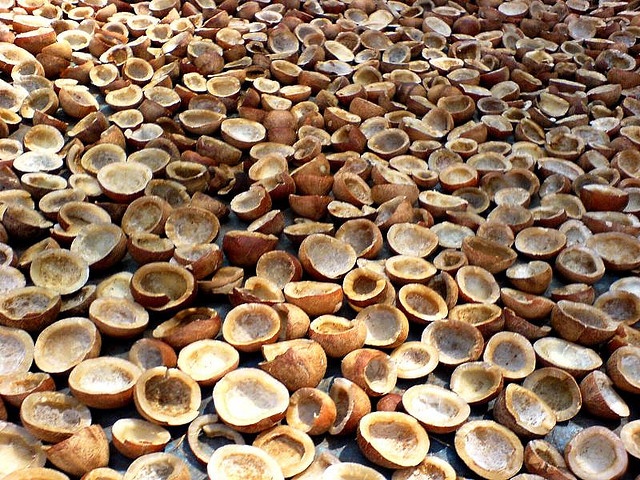
Copra Remains a Strategic Commodity
Copra is one of the most valuable processed coconut products with significant economic potential. It serves as the primary raw material for producing coconut oil, coconut meal, and various industrial products.
As one of the world’s largest coconut producers, Indonesia possesses enormous potential in the coconut industry. This positions copra as a strategic commodity capable of supporting the growth of the plantation sector and boosting the country’s export performance.
Downstream Processing Increases Added Value
The Indonesian government continues to encourage the development of the coconut downstream industry. The objective is to ensure that harvested coconuts are not merely sold as raw materials but are processed into products with significantly higher market value.
Copra can be processed into a wide range of value-added products, including coconut oil, virgin coconut oil (VCO), coconut milk, coconut flour, and raw materials for the cosmetics and pharmaceutical industries. Through downstream processing, the market value of coconuts can increase substantially compared to selling fresh coconuts.
Productivity Remains a Key Challenge
Despite its strong potential, Indonesia’s coconut sector continues to face several challenges. One of the most significant is the relatively low productivity of many coconut plantations. In addition, a large proportion of coconut trees are ageing, resulting in lower yields.
Limited access to high-quality planting materials and the adoption of modern cultivation practices also remain key issues. Therefore, plantation rejuvenation programmes and continuous farmer assistance are considered essential to improving national copra production.
Export Opportunities Continue to Grow
Global demand for processed coconut products remains strong, creating promising opportunities for Indonesia to expand exports of copra and its derivative products.
With high-quality raw materials and a well-developed processing industry, Indonesia has the potential to strengthen its competitiveness in international markets. Expanding downstream processing is also expected to create new employment opportunities in major coconut-producing regions.
A Brighter Future for Coconut Farmers
Looking ahead, the development of the copra industry will not focus solely on increasing production. The government is also promoting improvements in product quality, supply chain efficiency, and partnerships between farmers and processing industries.
These initiatives are expected to help farmers secure better prices for their harvests while enabling Indonesia’s coconut industry to produce higher-value products that can compete globally.
Through sustainable downstream processing, copra has the potential to become a key driver of economic growth while improving the livelihoods of millions of coconut farmers across Indonesia.